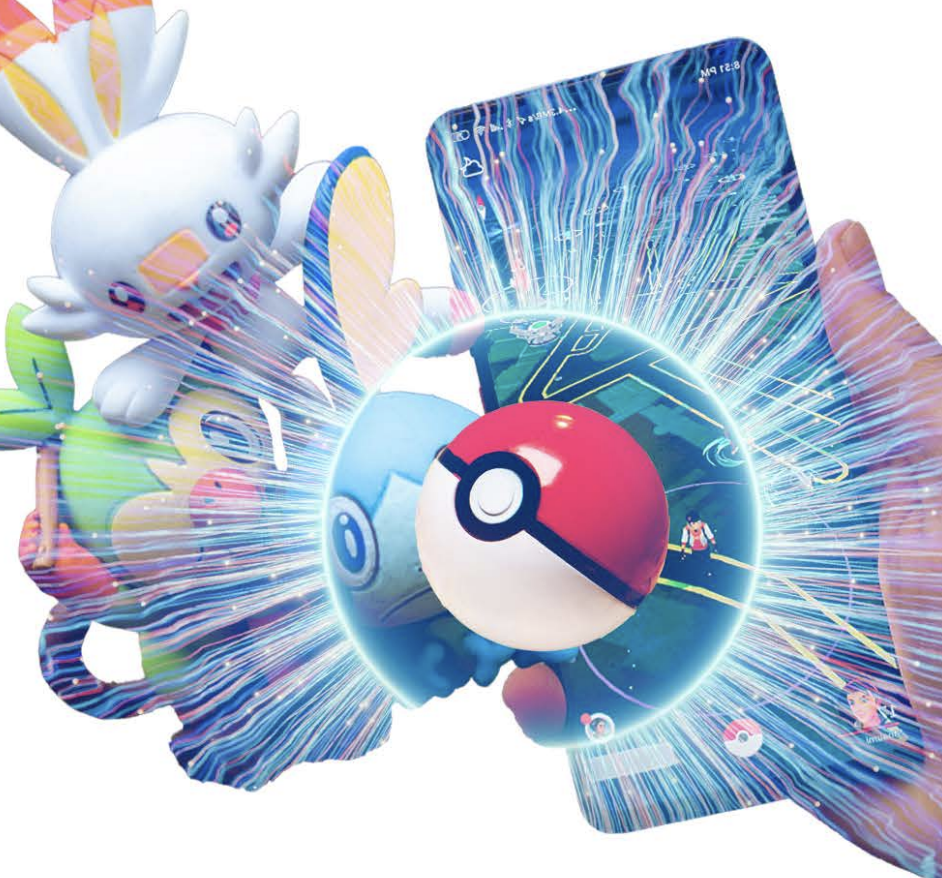
When news articles started circulating in March of 2026, that Pokémon Go had been a ploy to collect human information and surroundings with the intention of training AI Augmented Reality models, it is safe to say everybody felt blindsided. In 2026, as AI dominates every interface, writes our books and songs, and seeps into every corner of daily life, media consumption no longer feels organic. The nibbling feeling that something you are interacting with will be tracked, recorded and used against you is always there, but within this new generation we are used to it. It is only when something as widespread and seemingly innocent as Pokémon Go, an app we loved for its uniqueness and collective nostalgia, turns out to be another way for multi-million-dollar AI companies to use our data, that it begins to feel like a betrayal. The real, organic love for the game, and innocence in which everyone used and interacted with it, now feels like a huge scheme for billionaires to make more money and use our data at our innocent expense.
We liked to believe that Gen Z could spot AI instantly, that we would always know when we were interacting with it, but somehow the AI monster seeped into our lives right under our noses, way before we even knew what was going on.
The year is 2016. Beyoncé’s Lemonade has just been released, Kanye vs Taylor is airing on Snapchat, Millie Bobby Brown’s shaved head is debuting on Netflix, and ‘Closer’ by The Chainsmokers is the song guaranteed to get everyone to the dance floor. There were two things that were certain: everyone was doing the bottle flip and posting it on Vine, and everyone was playing Pokémon Go.
The game, developed by Niantic, took the world by storm. Inspired by an April Fools joke from Google Maps, by mid 2016, five hundred million people had downloaded the app, quickly turning it into a global phenomenon by summer. Pokémon Go became a craze. Suddenly, people were outside again; with streets, parks, beaches, bus stops all turning into hunting grounds for virtual creatures.
Pokémon Go is acknowledged with such a nostalgic aura, a rare moment when instead of technology isolating us, it brought us together and into the physical world. There was a common interest we could all discuss, and moments that we could all relate to as humanity. Now, exactly ten years later, we find ourselves in the middle of the new technology storm. AI is seemingly taking over the world and panic about the future remains at the forefront of our minds. Will our jobs disappear? Will our attention span survive?
Internet culture has long repeated the phrase: “If the product is free, you are the product”. Usually, we apply this when it comes to data, advertising and social media. We imagine platforms collecting our likes, habits and attention. But what about that app we all used ten years ago? Before anyone was even thinking about what AI was, and the idea of Large Language Models (LLM’s) were far out of reach, Niantic was using us as their test subjects for one of the first methods to find data about the world to train the LLMs we use today. Yes, when you were filming your surroundings while trying to capture the pokémons, you were single-handedly helping generate a software with hyper-accurate images of our daily world. One that far surpasses Google Maps. The admin task of taking pictures of all these places around the world was one that would take too much time and money for one company alone to execute. So, you did it for them!
Niantic was in no way keeping this a secret. It was addressed in their terms and conditions, alongside many articles in which they spoke about their intentions. As consumers and users of the app, it was actually our responsibility to know what we were signing up for. But, to say that we back in 2016 had a chance of knowing what AI would evolve into today, would be false. The tech uproar of the 21st century was always predicted by humanity to be flying cars, fancy software, and robotic cleaners. The idea of an algorithm having the ability to clone, imitate, and eventually replace us, is something that nobody was entirely ready for, or at least believed it would take much longer than fifteen years.
Niantic has confirmed that the technology, and over 30 billion images that they collected during Pokémon Go’s time (before they sold the app last year, they kept the data), would be used entirely for robot navigation, and specifically robot delivery service. What AI is not able to do, we know, is think like a human. AI needs to understand space, lighting, and weather conditions better. The PokéStops were all placed in urban areas in an attempt to get photo coverage in a way that only humans could. Coverage making it possible to build a 3D model that helps AI understand human surroundings, centimeter by centimeter, from the routes they take, to how the terrain is. Now, while this seems innocent enough, and the idea of paying less for a Foodora order by using a robot is fair play, there is more we need to be aware of.
What is the end goal? A fully autonomous molecular reconstruction service that can do anything. Whereby AI and robots can design, synthesise and analyse molecules without human intervention. Yann LeCun, an AI expert, tells us that the LLMs we are using today are dead-set on a path to human intelligence. At their core, they are getting better and better at understanding the world they talk about. For AI to bridge the gap between learning things in the real world, and learning them objectively, it has to get real world experience, say, through a high sensory video, spatial data, and interaction with the physical world. For example: a child learns what happens when they drop a spoon on the floor, because it makes a noise and it makes a mess. Whereas, an LLM model knows what happens when a spoon drops due to physics. These gaps in actual interaction and knowledge are what makes AI models unable to ever fully act human.
So, as technology experts try to adapt and develop their models to do so, they use the mass collection of “life through a real human’s eyes” and movements that we tracked and collected on our phones, on the Pokémon Go app. We made the blueprint that is helping to bridge the gap between human and robot, long before the tech of Meta Quest glasses.
Watching the world transform through AI can be really overwhelming, and we feel out of control about what will happen next. But by interpreting what mastermind Peter Putnam, the researcher who set out to understand the working mind (which is essentially what AI developers are replicating through game theory), will help us understand that AI can never replicate us.
Putnam conceived the mind as an induction machine: It learns by noticing patterns, repeating experiences, and using the past to predict what will happen next. That being, the nature of our humanity is repetition, and to repeat states to stay the same. The AI system is expected to learn this. Eventually, the plan is to make the sequence of its movements less random, and repetition of experience to teach them. This, of course, is not possible with maths or game theory in itself. We are complicated beings, and for a 2D machine to replicate and mimic 3D human activity and decisions, is virtually not possible. While we may have been drawn into using Pokémon Go without fully understanding its implications in full context, all the tracking and collecting will never make AI human.
The generation-wide experience of watching technology develop into something so unpredictable, is something that cannot fully be explained. We have grown up alongside apps, algorithms and digital platforms that once felt harmless, only to later realise they were studying us. When people started seeing the effects of Niantic’s augmented reality maps, they realised how early on we had been used as a training system for robots.
Today, so much of the conversation around AI is filled with panic: What do we do when the robots take over? How do we have jobs? What is left of us? But this is not the first technological storm society has faced. Culture adapts. Work adapts. People adapt. And while the future may feel uncertain, history suggests that we are better at adjusting than we think. Like the adaptable creatures we have always been, we will find a way to live with what we have created.