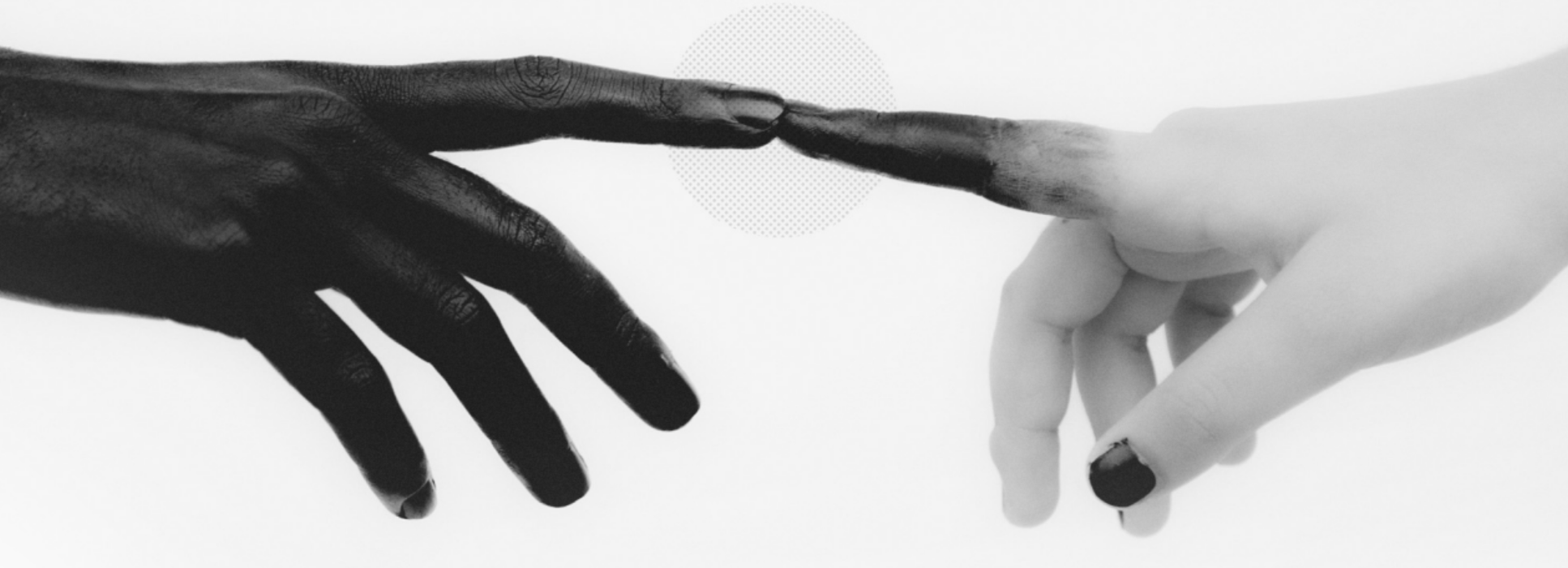
Love lives in the tension between independence and intimacy, and that tension is not something to fix, but something to move within.
You are lying next to someone you care about, their presence comforting and familiar. And yet, somewhere in the quiet, a thought slips in: I need space.
Not because something is wrong, but because something inside of you is trying to hold on to itself. The closer we get to someone, the more we risk losing that sense of who we are, or at least that is what it can feel like. So we pull back. Then we miss them, and move closer.
Maybe every relationship is shaped by the same quiet questions:
How do you remain yourself while becoming part of something shared? How do you stay close to someone without disappearing into them, stand on your own without pushing them away?
Be close, but not too close; be independent, but not distant. As if love requires choosing one side and carefully managing the other.
What if that is the wrong way to look at it?
Maybe relationships are actually about learning how to balance independence and intimacy. Ironically enough, closeness and distance are forces that shape one another. The need to connect with someone does not erase the need to be alone. Like yin and yang, they exist in relation but are only understood in contrast.
Holding On to Yourself
The need to stay ‘you’ does not always announce itself loudly. It shows up in small ways: wanting an evening to yourself, keeping certain thoughts unshared, holding on to parts of your life that do not involve the other person. Independence, in this sense, is not distance, it is space: to grow and keep your boundaries without losing who you are. In long-term relationships, identity can blur in quieter ways. You become part of a unit: introduced together, referred to together, seen as an extension of one another. You are no longer just yourself, but someone’s partner.
At first it may feel natural, even comforting. Though over time, the thought ‘who am I outside my relationship’ may start to appear in your head. Not in a dramatic relationship-threatening way, but in the subtle moments. When you meet new people, do they see you, or the relationship you are a part of? Do you feel the need to explain yourself before you can explain your relationship? When you speak, are you expressing your own thoughts or the shared voice you’ve built together?
It can become surprisingly difficult to separate the two because the relationship has become so integrated into how you are seen and how you see yourself. Maintaining independence, then, is about preserving a sense of self that exists outside the relationship. Letting others see you as an individual and allowing yourself to do the same. Being part of a ‘we’ is only sustainable when the ‘I’ still has room to exist.
Being Known
Staying yourself, however, is only one side of it. The other is just as strong, the need to let someone else in. To be close to someone is to be seen in the uncertain, unpolished moments. It is in the conversations that go a little deeper than expected, in the quiet understanding that builds over time, in the moment you say something you were not planning on saying and realize you are not being judged for it.
Intimacy is the willingness to be known. To let someone else step into your inner world and trust that they will not misuse what they find there. When that kind of closeness is missing, something feels off, even if nothing is visibly wrong. You can spend time together, talk, laugh, go through the motions, and still feel a certain distance. Conversations stay on the surface and parts of you continue to remain unshared. In moments like these, independence feels different because staying true to yourself only feels possible when there is also somewhere to bring that person back to.
The Push and Pull
Independence and intimacy coexist, pushing and pulling each other. The closer you get to someone, the easier it is to feel like you are losing a part of yourself. The more you try to hold on to that sense of self, the greater the risk of creating distance.
So, naturally, you move between the two, the same quiet rhythm, pulling back, then moving closer again. You take space, then miss the closeness. For some, closeness feels like safety; for others, it feels like pressure. Most of us move somewhere in between, shifting depending on the person, the moment, the stage of the relationship. This tension means something real is happening, two equally valid needs trying to exist at the same time.
Living In-Between
If the tension is unavoidable, then maybe the goal is to learn how to live within it. Healthy relationships make space for the push and pull momentum. For moments of closeness and moments of distance, without either one being misinterpreted. That kind of space requires trust; stepping away does not mean leaving and moving closer does not mean losing yourself.
It also requires flexibility and understanding that both people are still evolving and figuring themselves out, and that the relationship has to move with that, not against it. There is no fixed point where everything stays perfectly balanced, only a continuous adjustment. A return, again and again, to that space between being connected and being yourself.
Back to the Moment
Maybe it’s in those quiet moments, lying next to someone you care about, their presence still there, still familiar, that this becomes most visible. The thought I need space does not have to mean something is wrong. It can simply mean that both parts of you are still there: the part that wants to be close, and the part that wants to remain your own.
Love was never meant to be something you get exactly right, but a kind of movement. Back and forth. Closer and further. In the end, it is being able to hold both without losing the other person, and without losing yourself.