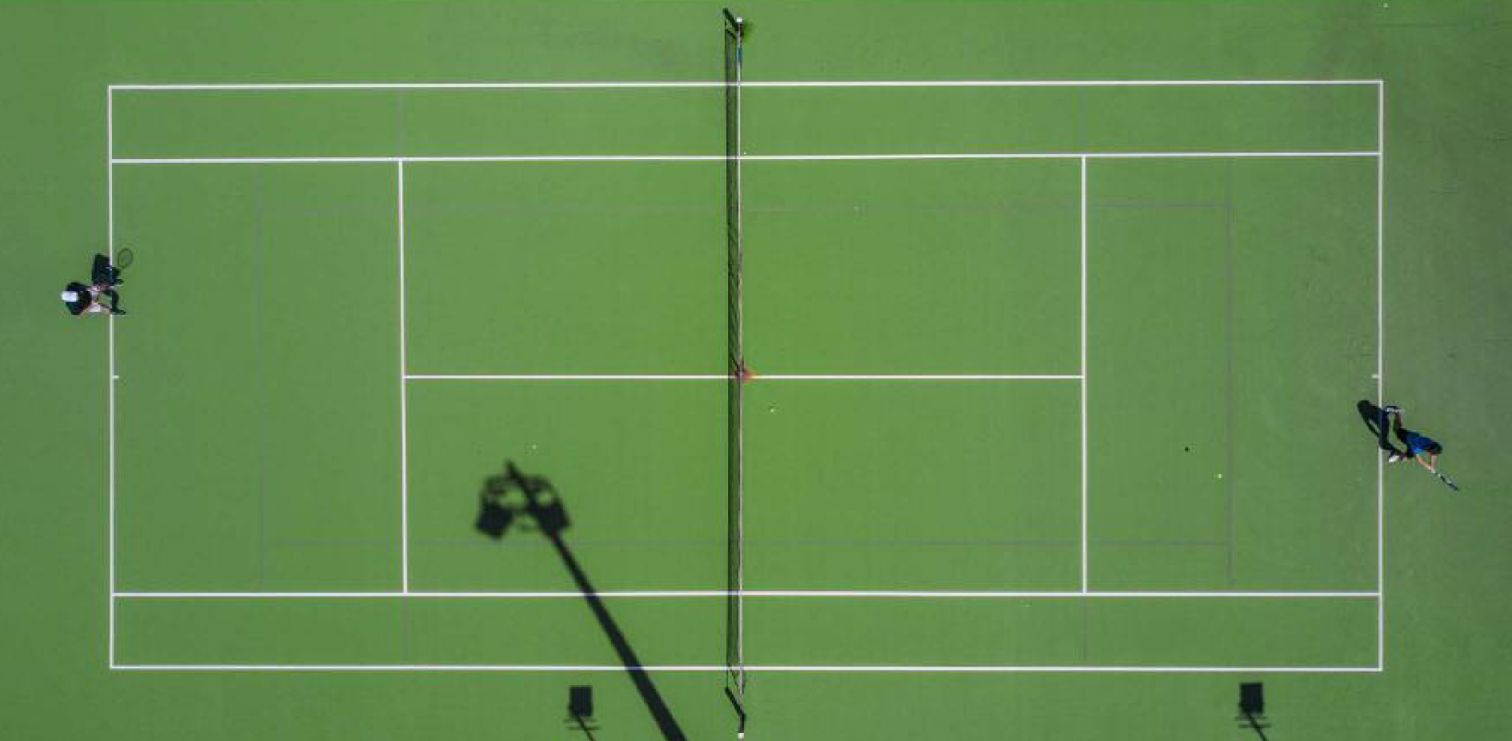
Under the floodlights at Wimbledon, two champions lift identical trophies. The grass is the same shade of green, the lines precisely measured, the prize money printed in matching figures. Tennis presents itself as a model of equality: men and women competing on shared courts, under identical tournament banners, cheered by the same global audience. From the stands, and on paper, the symmetry is perfect.
Well, almost perfect.
Beyond the prize ceremony and polished headlines, the balance begins to shift. This appearance of equality in tennis functions like a wall, solid and uniform from the outside, but concealing quieter inequalities in format, framing, and respect. The court may be shared, but the conditions are not.
The Myth of Neutral Sport
Sports are often described as untouched by politics, a space where the scoreboard determines winners and losers. However, sports have never existed outside society, and the funding, scheduling, broadcasting and promotion that shapes them reflect broader social priorities and determine which athletes become visible. Tennis is a perfect example of how these structures operate.
Efforts to address inequality in sports have existed for decades. In the United States, Title IX (1972) prohibited sex discrimination in school sports and education, making equality a legal requirement1. The existence of a law does not automatically dismantle the organizational framework behind the wall. Differences in funding and visibility, shaped by decades of media coverage, marketing, and broadcast decisions, remain.
That said, a common defence is that men’s games generate more revenue due to higher ticket demand. When Dallas Mavericks owner Mark Cuban was questioned about the pay gap in basketball, he responded: “The difference is the total amount of revenue. It’s not a gender issue, it’s a revenue issue”.
Revenue reflects market demand, but when inequalities are explained this way, it ignores how that demand has been cultivated through investment, promotion, and visibility. Whose matches are given the prime-time television slots? Whose highlights appear most online? Which tournaments receive the largest marketing budgets? Sports are innately shaped by the social, economic, and cultural landscape that underpin societal structures.
Equality – With Conditions
Tennis is frequently presented as the sport that solved the gender pay gap2, with all four Grand Slams awarding equal prize money to men and women.
This equality, however, is conditional. Not every tournament on the professional circuit offers equal payouts, particularly at lower-tiered events. The popularity of men’s sports is partly the result of endorsement deals and sponsorships shaped by market perceptions that have historically favored the men’s game. More investment influences which matches receive the most attention. Over time, this visibility builds a larger audience, reinforcing the idea that men’s sports are naturally more profitable despite the demand being influenced through unequal resources and attention.
Structural differences also appear in the format of the sport itself. At Grand Slams, men play best-of-five sets while women play best-of-three. Long matches appear more epic, guaranteeing more airtime and extended narrative arcs that shape tournament storylines. The length of matches then becomes associated with endurance and perseverance, subtly influencing how greatness is measured in the sport. Over time, these structural differences influence not only how the game is played but how its players are valued and respected.
The Wall of Respect
Serena Williams is one of the greatest athletes in sporting history. With 23 Grand Slam singles titles and having held the number one female ranking for a total of 319 weeks (~6 years), she dominated women’s tennis in a way few athletes dominate any sport. Her success should place her beyond question. However, Williams has faced scrutiny that male players rarely encounter.
Her emotional expression on court was frequently policed in ways that differed from how similar behavior by male players was interpreted. The 2018 US Open Final against Naomi Osaka provides a defining example. During the match, Williams argued with the umpire after receiving a coaching violation and later called him a ‘liar’ and a ‘thief’. She was fined $17,000 and docked a game3.
For the same actions that often lead male players to be described as passionate or competitive in commentary and conversation, Williams’ protest toward officials and the umpire was portrayed in newspapers as excessive and threatening. That moment in 2018 raised a bigger question that extends beyond a single match: who is allowed to be powerful without being punished? Serena Williams’ career demonstrates that equality in prize money does not automatically translate to equality in respect.
Who Gets Noticed
Language also shapes perception. Reports on women’s matches often reference emotion or personal narratives, while men’s performances are analyzed through tactics and dominance5. This was evident during the 2015 Australian Open, when Sports presenter Ian Cohen asked Canadian tennis player Eugenie Bouchard if she could ‘give him a twirl’ and show off her outfit, shifting the focus of the interview toward her appearance and less on her strategy and skills. She later remarked that if she were expected to respond to a question like this, male players should likewise be asked to flex their muscles4.
Male players are described as aggressive or commanding; female players as graceful or emotional. Visibility generates revenue, and that revenue is then used to justify the disparities that created it, a constantly repeating cycle. These linguistic patterns shape how audiences perceive the game, influencing which players are the most memorable and ultimately more visible.
British tennis player Andy Murray has repeatedly challenged the way women’s achievements are overlooked. In one notable interview, a journalist called him “the first person ever to win two Olympic tennis gold medals,” to which Murray quickly responded by pointing out that sisters Venus and Serena Williams had already achieved that milestone multiple times. His response highlighted how easily women’s accomplishments can be erased and how often male achievement is treated as the default. In sports, who gets remembered ultimately shapes who gets noticed in the first place.
Beyond the Wall
Tennis appears to be one of the most progressive sports in the world. Men and women share the same tournaments, courts, and trophies, but equality in sports is rarely that simple. It reflects decades of media prioritization, marketing investment, and broadcast exposure. These forces shape visibility far beyond the baseline, revealing that the wall is in fact man-made, not neutral. The illusion of equality holds, that is, until you look behind the wall.