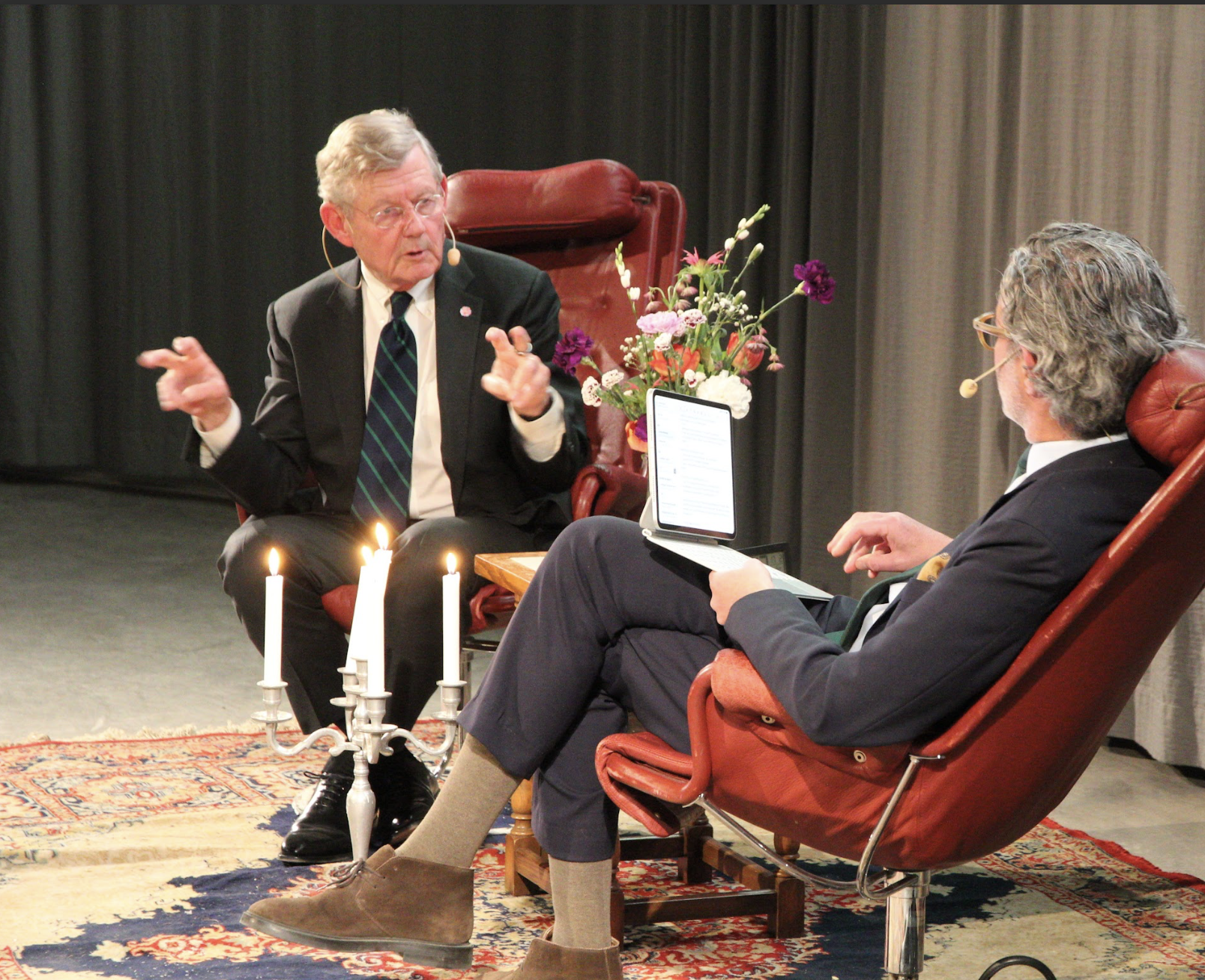
Tuesday, April 21, is no ordinary Studentafton. The long-established student association has, once again, managed to invite one of Sweden’s most powerful men: Jacob Wallenberg. The Wallenberg family has ruled over their business empire for five generations. Today, they indirectly control around a third of Sweden’s GDP. I have attended many discussions organised by Studentafton, and thus been in the presence of many great men and women. Few people exude the kind of power, and evoke the kind of respect, as Jacob Wallenberg does. No matter how the evening is packaged or the marketing done, no matter what questions will be asked or what answers will be given, both Jacob himself, and the Swedes around him, know one fact very well: What Wallenberg says, goes. If he wants to speak, Sweden will listen.
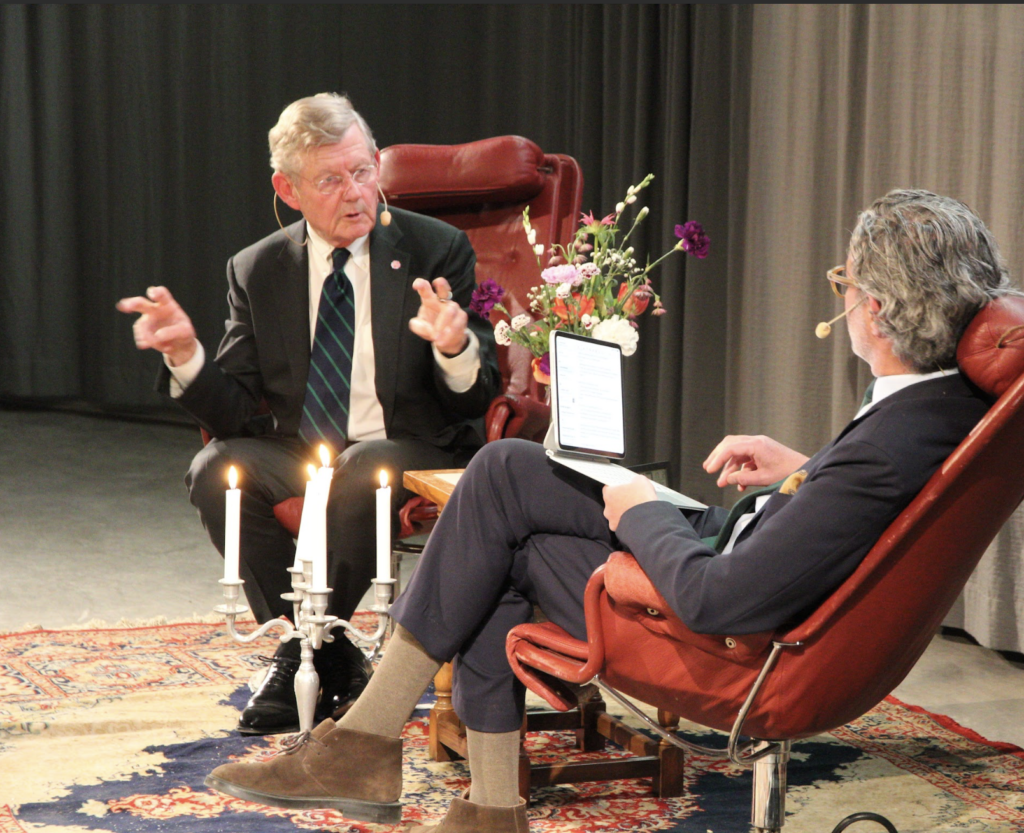
Image: Studentafton
The Wallenberg family is today ruled primarily by three men: Jacob, Markus, and Peter Wallenberg. Their investments are done through the company Investor, which in turn is owned by a foundation, Knut and Alice Wallenberg’s Foundation. As of 2026, Investor has beaten the stock market 15 years in a row. Just the day before Studentafton, the company had presented their latest quarterly report – the best in Investor’s history.
But as the audience takes their seats, as the president of Studentafton, Simon Bernstone, presents the guests, as Jacob and the moderator of the evening, Henrik Mitelman, sit down, something else strikes me immediately: There are no women around.
The Wallenberg family, and the Swedish business sector as a whole, is still ruled by men. Only a few times has this reality been so clear. During the last thirty minutes, when the floor is opened up to the audience, only one woman asks a question – me. The only time I see a woman daring the stage, it is to refill Jacob’s glass of water. While most evenings organised by Studentafton are attended by a mix of men and women, this evening proves to be a stark contrast. Today, Palaestra’s grand hall is filled almost exclusively by men.
However, Jacob Wallenberg is not necessarily an old fashioned man. In addition to their work in Investor, the Wallenberg family’s main goal is to provide funds to Swedish research and universities. As the family’s holdings are fully owned by their foundation, no sole member can pay themself dividends or cash in record sums. The motivation, fuelled by more than just money, shines through in Jacob’s answers.
Henrik Mitelman is an experienced economic journalist, and asks Jacob if it was easier in the past, how he has experienced the weight of his last name, and what his days look like. The questions are interesting, but most of them appear slightly wrapped in flattery. For a decade, Henrik worked at Wallenberg’s bank, SEB. Is he having a hard time trying to investigate, instead of impress, his former boss?
Instead, questions regarding Wallenberg’s work and future provide the most interesting answers. Among other things, Jacob explains the importance of AI, how Wallenberg works toward the green transition, and the importance of daring to go forwards.
Jacob Wallenberg is not directly political, but his thoughts and opinions concern more than only the immediate business sphere. He makes it clear that although the green transition is not as hyped today as it was a couple of years ago, it is just as important. Still at the top of the agenda, Jacob is sure that it is a necessary step to achieve long-term economic growth and promote European competitiveness. Starting out, his answer flirts with the left side of the political spectrum, but this is soon to be interrupted. Prefacing with the fact that “most of you won’t like this”, Jacob highlights the importance of aviation, and means that the degrowth of the Swedish flight industry is a direct threat to our economy.
During the evening, Jacob is generally positive. Wallenberg’s investments are successful, and he can take credit for most of them. When asked about what the key to Investor’s recent success is, he cheekily replies: “I became chair”. However, if there is one thing that seems to truly worry Jacob, it is Europe’s lack of growth. He refers to previous reports, where the U.S.’ GDP per capita today exceeds the EU and Great Britain’s by 25%, after having been almost identical only 15 years prior. “It is shocking”, he tells us, explaining how less growth ultimately leads to fewer jobs, a smaller tax base, and in the end, a worse welfare system. “We are reaping the rewards of hundred years of industrial success”.
What is the reason for this lack of growth? Answering this, Jacob once again begins by warning the audience: “Now you’ll be angry with me”. He then continues on a harsh track, mentioning that he believes that the fact that Europeans face a quite decent reality even as unemployed, makes us less “hungry” than American and Chinese people. Europeans have free education and universal healthcare, leading to a general feeling that everything will work out. Why work ourselves to death? It is clear that Jacob misses a kind of hustler culture in Europe, and he seems almost baffled by ideas of shortened work weeks or the removal of an unpaid first sick-day.
Perhaps predicting that the young audience will not immediately like this answer, Martin asks Jacob what he believes we should do about this? You can not really tell people to simply want to work more? Jacob’s answer is short: he believes the question to be deeply culturally rooted. He does not order people around. He does not have the answer, but he thinks the problem is important to highlight.
Few people have been as thoroughly trained at what they do, as Jacob Wallenberg. No question can surprise him and no problem has not already been thought through. The evening does not provide the audience with many more answers than could be found in countless previous interviews. Still, it is difficult to not be impressed by his knowledge of the business sector and the world’s economic needs. The only time he ever seems to let the audience down, is when answering the final question of the evening. As tradition goes, the head of Studentafton asks all participants what their dream guest would be. Jacob Wallenberg bends the rules and mentions someone not currently living: Margaret Thatcher. The murmur heard around the room is discreet but impossible to miss. Thatcher is not very popular among the young audience, and this evening, the answer becomes the first and only indicator of what many believe might be the true worry of Wallenberg: Is the current leadership slowly becoming obsolete?